


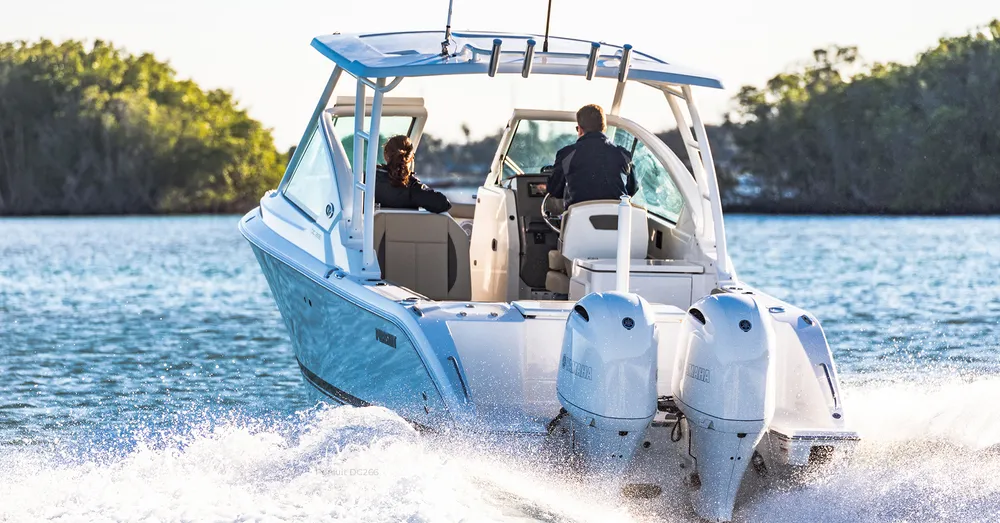
Navigating highly congested waterways along Southeast Florida and the Treasure Coast during peak weekends demands sharp situational awareness, defensive seamanship, and absolute mechanical confidence.
When popular routes in Stuart, Riviera Beach, and Lighthouse Point fill with recreational watercraft, managing heavy vessel traffic can escalate into a high-stress situation. Implementing key tactical strategies for timing, ramp etiquette, and right-of-way rules ensures your crew stays secure and your vessel avoids unnecessary liabilities during the busiest days of the season.
1. Master the Launch and Retrieval Protocol
The public boat ramps near our regional hubs are often high-pressure environments on weekend mornings. Heavy traffic and tight quarters mean that efficiency and courtesy are essential to keeping the launch lines moving.
- Pre-Stage Your Gear: Never pull onto the active ramp lane to load coolers, life jackets, or water toys. Park in the designated staging area and transfer all equipment into the hull before backing down the ramp.
- Clear the Lane Immediately: Once your hull floats free, immediately guide the vessel to the staging dock away from the active launch path. Promptly move your tow vehicle and trailer to the parking lot so the next captain can utilize the lane.
- Maintain Order: Treat retrieval with the same systematic approach. Do not pull onto the active ramp until your tow vehicle is in position and ready to hook up the winch strap.
2. Practice Defensively on the Water
Heavy traffic increases the number of variables on the water, requiring constant, 360-degree situational awareness from the helm.
- Scan Continuously: Constantly monitor the horizon for swimmers, kayakers, and personal watercraft that may maneuver unpredictably near local sandbars.
- Designate an Observer: When operating in high-congestion zones, assign a trusted crew member to act as a dedicated lookout. A second set of eyes helps spot blind spots, approaching wakes, or shifting hazards while you focus on navigating the channel.
- Distribute Load Effectively: Ensure passenger weight is distributed evenly across the deck layout. Overloading one side of the hull alters your center of gravity, degrades responsive steering, and compromises visibility over the bow.
3. Strictly Adhere to Right-of-Way Directives
When multiple vessels converge in a narrow channel or major inlet—such as the St. Lucie Inlet or the Lake Worth Inlet—understanding who has the right of way eliminates confusion and prevents close-quarter emergencies.
- Overtaking Protocols: If you are passing a slower vessel from behind, you are the give-way vessel. Provide maximum clearance to ensure your wake does not disturb or destabilize the other craft. If you are being overtaken, maintain a predictable course and ease back on the throttle slightly to let the passing boat clear your bow safely.
- Crossing Scenarios: If two power-driven vessels are on a collision course, the boat to your starboard (right) has the right of way as the stand-on vessel. You must alter your course to pass cleanly behind their stern.
- Establish Priority: Always remember the hierarchy of the waterways. Highly maneuverable powerboats must yield to sailboats under sail, commercial vessels constrained by draft, and anchored fishing boats.
4. Maintain Meticulous Docking and Fueling Manners
Congested marinas and fuel docks require precise throttle control and strict spatial awareness to prevent gelcoat damage or shoreline clutter.
- Approach at Dead Idle: Never approach a busy dock faster than you are willing to impact it. Coast into the slip using short, controlled pulses of power to counter local currents and wind shifts.
- Deploy Fenders Early: Hang heavy-duty fenders at the proper height on both sides of the hull before entering the marina basin to protect your gelcoat from sudden impacts against pilings or neighboring hulls.
- Clear the Fuel Dock: The fuel dock is strictly for refueling, not long-term mooring. Pump your fuel, settle the bill, and immediately move your vessel to a standard slip or anchorage so other captains can access the pumps.
5. Prioritize Mechanical Integrity Before You Launch
The ultimate disruption to a weekend trip is a mechanical breakdown in a crowded channel, leaving your vessel vulnerable to drifting into traffic or running aground in high-current zones.
- Verify System Health: Conduct a comprehensive pre-trip audit of your batteries, electrical connections, and bilge pump float switches. Ensure your fuel filters are clear of moisture and debris.
- Upgrade Inconsistent Power: If your current outboard stalls out or lacks the low-end torque needed to maneuver confidently in tight marina quarters or heavy inlet currents, upgrading through our authorized Mercury Repower program can outfit your hull with digital controls and modernized fuel systems.
- Schedule Certified Service: Preventative maintenance is your primary defense against seasonal failures. Schedule a diagnostic multi-point inspection with our factory-trained technicians at our Service department, and source factory-direct OEM replacement parts at our Parts counter.
Frequently Asked Questions
How do I find a platform better suited for heavy chop and busy weekends?
If your current boat feels unstable or lacks the visibility needed for heavy traffic, browse our extensive inventory of premium New Boats and thoroughly reviewed Used Boats to find a model built to handle coastal conditions.
Can I trade in my current boat to streamline an upgrade?
Yes. Our Sell / Trade department provides transparent evaluations, allowing you to easily transition out of your old vessel and roll the value directly into a modern platform.
Where can I find more technical navigation guides or local updates?
To learn about our corporate history and dedication to Florida boaters, visit our About page. You can track upcoming customer workshops on our Events page, check current dealership promotions on our Specials page, and view verified client feedback on our Reviews page.
To review your coverage parameters or secure your hull, consult our Extended Service Contracts list and Marine Insurance programs. For maps, operating hours, and direct lines to our showrooms, check our Contact page.